Two-seater, teak
Untreated A-grade teak, weathering to silver-grey.
11,995 DKK € 1,585Longwood House · Saint Helena · 15°57′ S, 5°42′ W
A faithful reproduction in solid teak of the bench that stands at Longwood House on Saint Helena — built under an exclusive worldwide licence from the company that conserves the place.
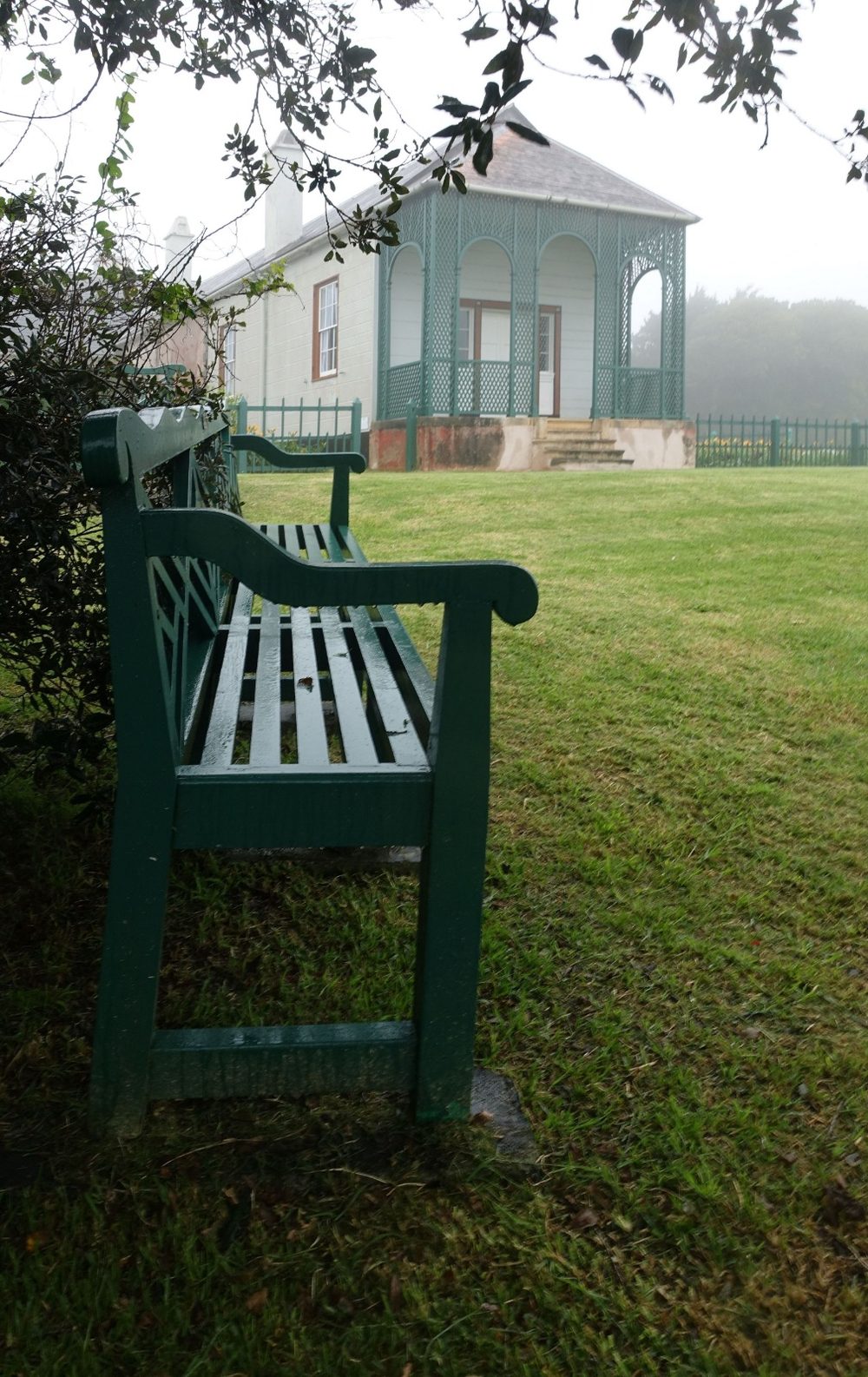 Longwood House, a morning in mist
The agreement · 11 October 2018
There are many garden benches in this pattern. There is one maker with a signed, exclusive agreement with the company that administers the place where the original stands.
The agreement is between Tectona Holding Pte Ltd, Dagmar Njord and Saint Helena Napoleonic Heritage Ltd, PO Box 14, Longwood House. It grants the sole right to manufacture and sell a reproduction of the bench — worldwide and without territorial limitation — together with the right to use the SHNH name on the product.
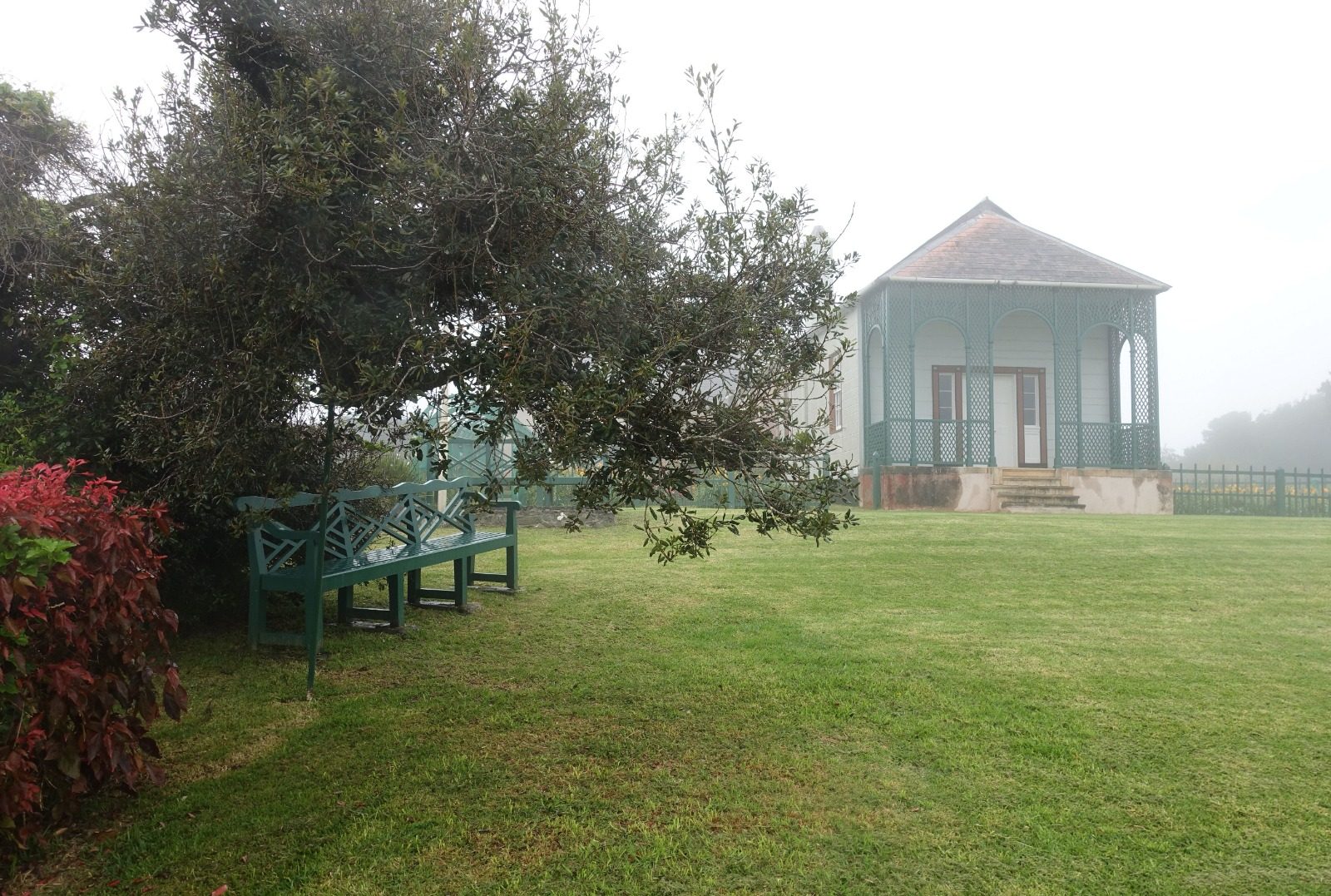
The place
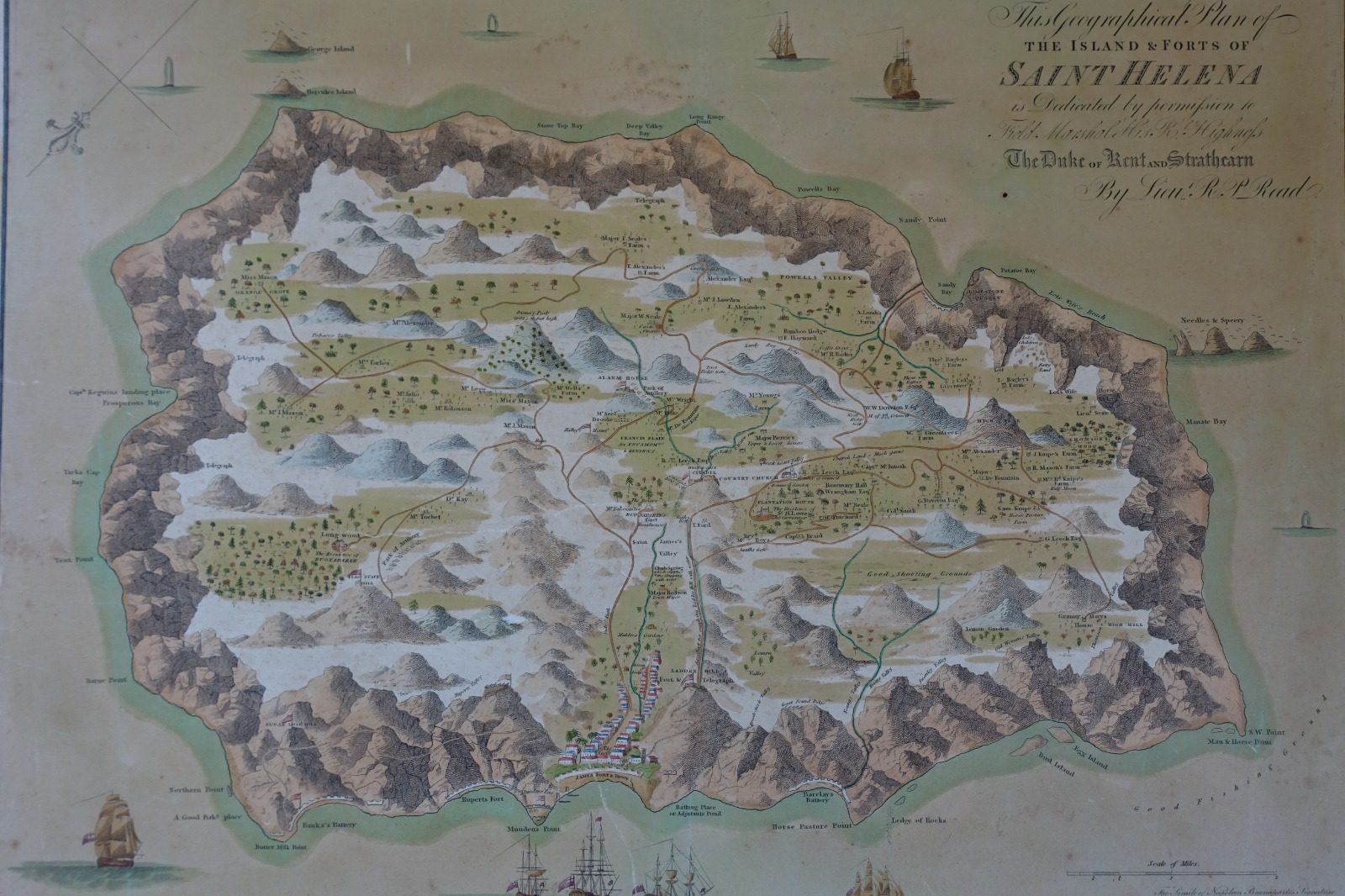
Napoleon arrived on Saint Helena in October 1815. After two months in the pavilion at The Briars he moved into Longwood House in December, where he lived until his death on 5 May 1821 — five years and seven months on the island in all.
Longwood House, the pavilion at The Briars and the tomb in Sane Valley were bought by France from Britain in 1858 under Napoleon III. They remain French state property to this day, administered by the French foreign ministry through a resident consul who is at the same time conservateur of the domains. The post has been held by Michel Dancoisne-Martineau since the late 1980s, and it is he who signed our agreement.
Longwood sits on a windswept plateau in a maritime climate. The major restoration of the 2010s did not finish the maintenance — it reset it. Salt, wind and damp make conservation a running cost. The royalty from every bench goes towards that cost.
This is rare in the furniture trade: a licence from the institution that owns the original, where the money returns to the place the object comes from.
The object
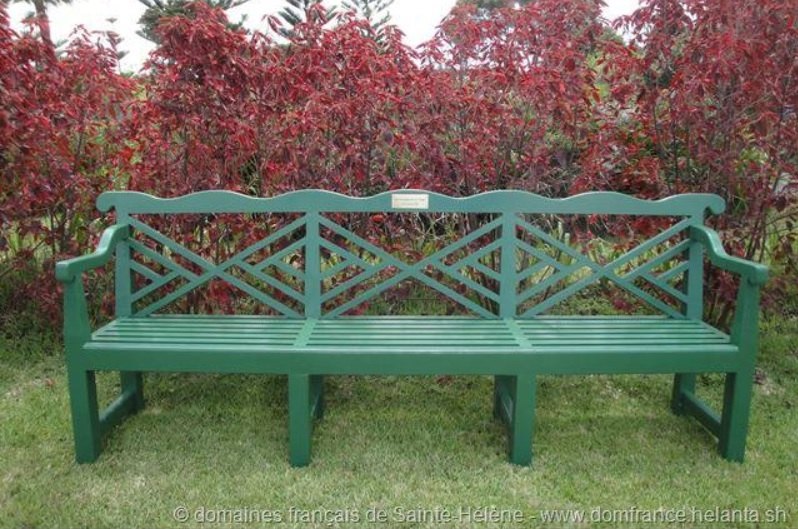
The bench at Longwood is a slatted bench with a serpentine crest rail, scrolled arm ends and a back of three bays, each with a cross lattice and a diamond at the centre. The pattern belongs to the English Chippendale garden style — the Chinese-influenced variant published in The Gentleman and Cabinet-Maker’s Director in 1754 and copied from there across Europe and the colonies.
The line backwards
We keep to what can be documented. See also the section on what we do not claim.
Chippendale’s Director appears with the cross lattice in the Chinese-influenced garden style. The pattern becomes common in British colonial furniture.
Napoleon moves into Longwood House. The furniture is assembled by the British government and the East India Company from whatever could be shipped or found.
Napoleon dies at Longwood on 5 May.
France buys Longwood, The Briars and the tomb. The sites become French state property.
A draughtsman measures the bench and draws it in elevation and profile, scale 0.10 p.m., under the title «Copie du Banc de Sainte-Hélène». The lattice geometry on the drawing matches the bench standing at Longwood today.
The manufacturing and trademark agreement with Saint Helena Napoleonic Heritage Ltd is signed on 11 October.
The anniversary edition of 250 numbered examples goes into production.
The drawing · November 1930
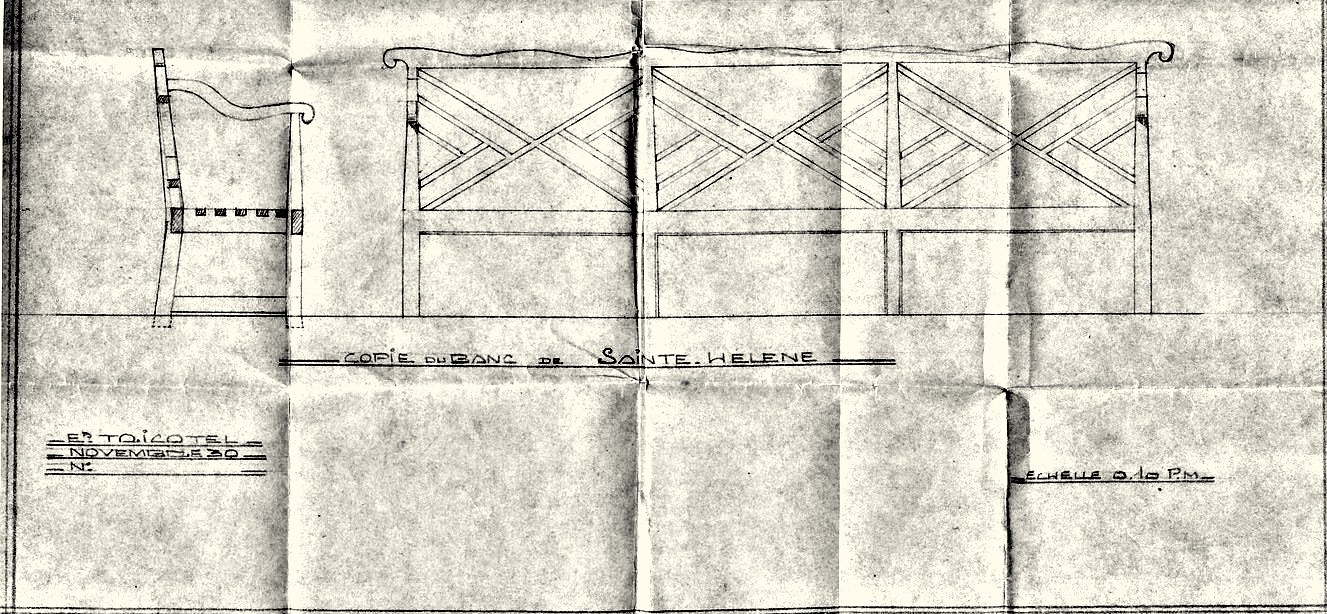
The drawing is not a claim about the bench. It is a technical record made from the bench, by someone who stood at it with a tape measure.
The lattice geometry on the drawing matches the bench standing at Longwood today. It is the best evidence there is that the object has stood unchanged for almost a hundred years.
And it shows something else: that faithful reproduction of this particular bench is a documented practice and not a marketing idea. That is the tradition our licence places us in.
The workshop
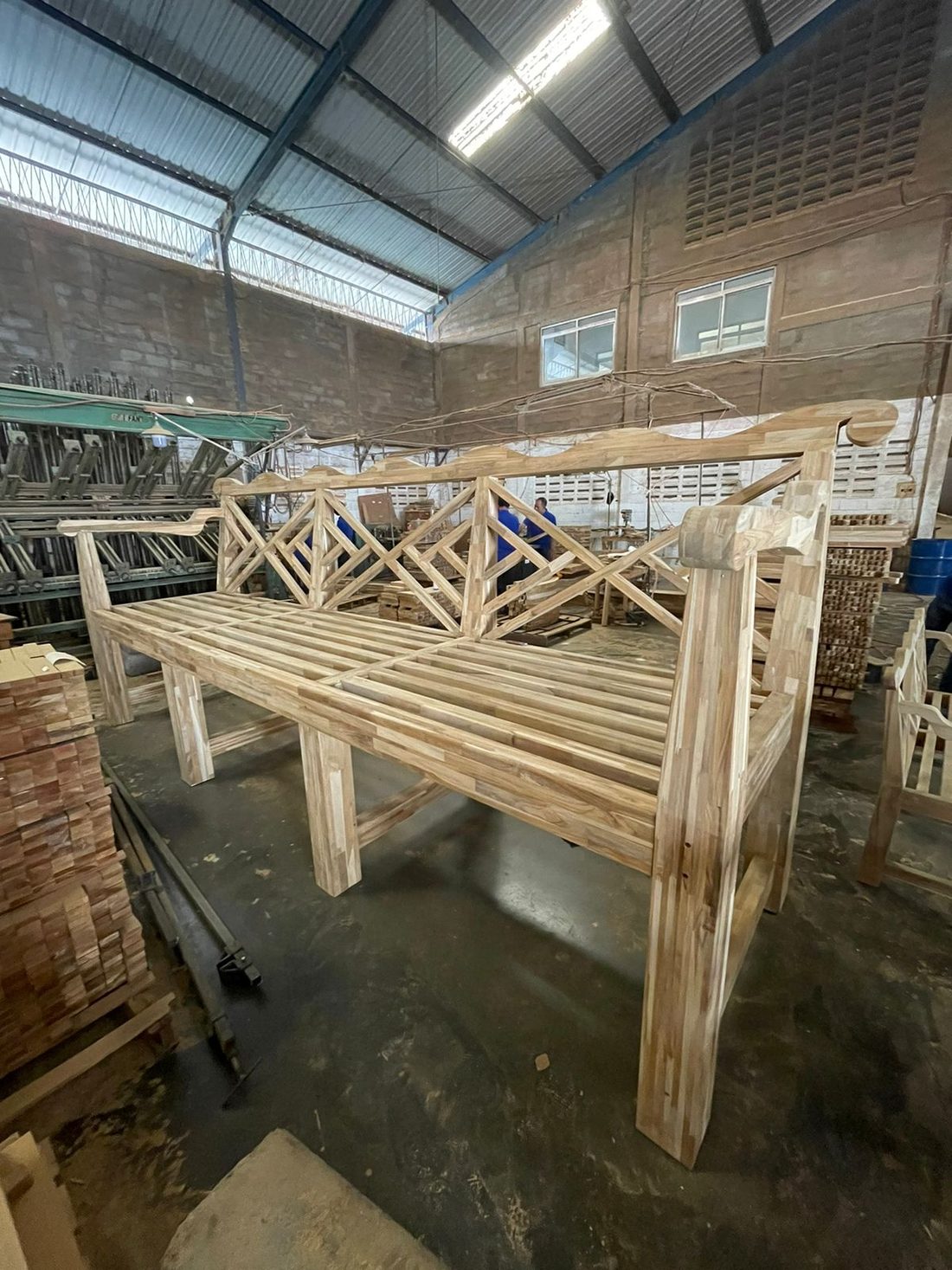
The benches are made to order in solid teak at Tectona’s own workshop in Indonesia. The blanks are kiln-dried before assembly, and component selection and finish follow the specification agreed with SHNH.
We are precise about who does what. What is Danish in this bench is the design, the specification and the quality control, through Dagmar Njord. The craft in teak is Javanese — a tradition just as real, and the reason the furniture stands up to being left outdoors all year.

Trees4Trees
For every bench sold, four trees are planted through the non-profit foundation Yayasan Bumi Hijau Lestari in Semarang, Central Java — the same island the teak comes from.
Every tree is QR-tagged and can be found on the map. The buyer gets trees that stand somewhere, not a certificate. Registration is against the bench’s number, so the trees and the bench can be looked up together.
On the claims
A story circulates that Napoleon himself designed the bench on Saint Helena. We do not use it, because we cannot support it — and what we do know pulls the other way.
Napoleon commissioned and directed furniture, but there is no record of him drawing or building a piece himself. His training was mathematics and artillery. The furniture at Longwood was procured by the British and the East India Company, and its poor quality was a standing complaint of his. And the form — serpentine crest, cross and diamond — is English Chippendale garden style from 1754, in common circulation in British colonial furniture long before 1815.
The most likely explanation is that it is an English garden bench of Chippendale type that came to Longwood by the same routes as everything else — and that it became Napoleon’s bench by use, not by authorship.
It is also the better story. «Napoleon designed it» can be taken apart in an afternoon. «This is the bench Napoleon sat on in his last years, and we build it under exclusive licence from the people who conserve it» cannot.
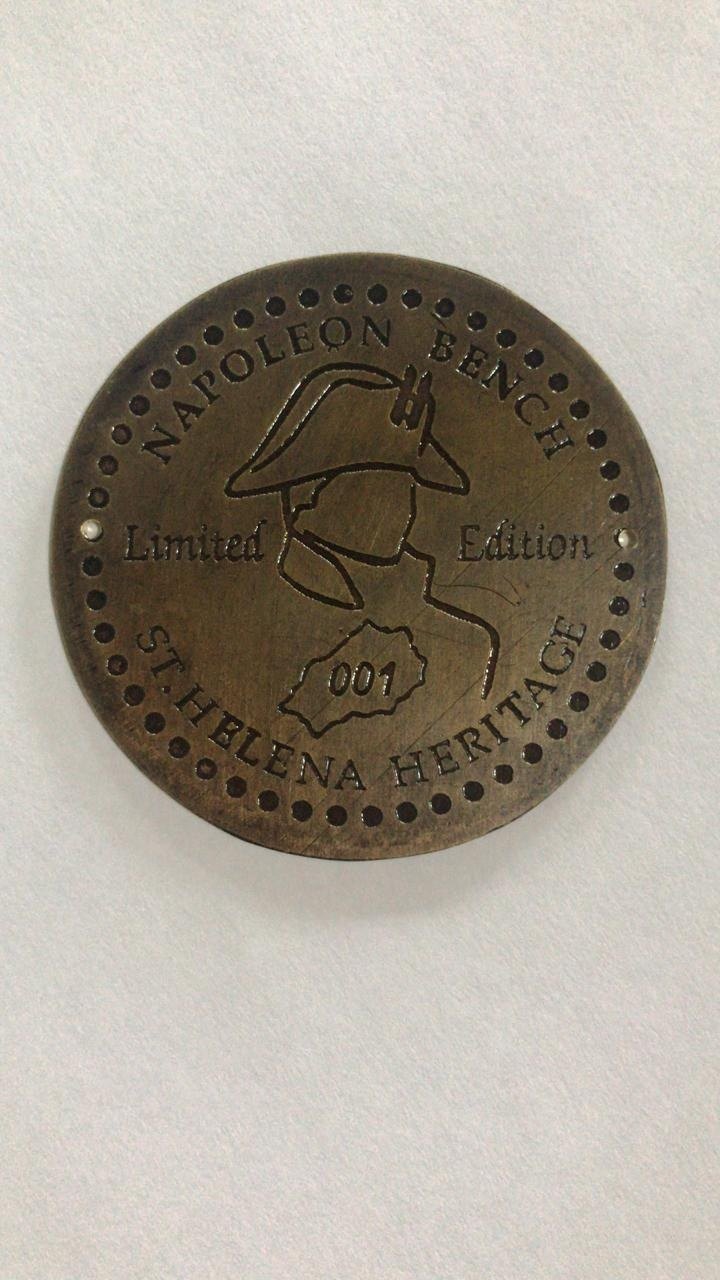
The number
The plaque is cast in brass and fitted to the bench before it leaves the workshop. The bicorne in profile, the outline of the island and the number in the series — 001 is the first built under the agreement.
The number stays with the bench. It is in our books alongside the order, so a bench can always be traced back to the series and the year it was built in. It is also the number your four trees are registered against.
Prices · incl. VAT
Untreated A-grade teak, weathering to silver-grey.
11,995 DKK € 1,585233.5 × 63.0 cm. The same width as the original at Longwood.
14.995 DKK € 1,975Painted in Napoléon Vert Empire, the Longwood green.
14.995 DKK —Three-seater from the series of 250 numbered examples.
On request Write for a numberEvery bench is made to order. Write to us and we will come back with a lead time and shipping to your address.
The Napoléon Bench is a faithful reproduction in teak of the bench Napoleon used during his exile at Longwood House, built under an exclusive worldwide licence from Saint Helena Napoleonic Heritage Ltd. Twelve per cent of every sale goes back to the conservation of the French domains on the island. The bench has been measured and reproduced since at least 1930; each of ours is made to order, numbered, and accompanied by four planted trees.